 Skip-the-line available
 The Best Time to Visit Château de Chenonceau
A month-by-month guide to crowds, gardens, light and the Christmas illuminations at the Château des Dames in the Loire Valley.
Few Loire châteaux reward timing as directly as Chenonceau. Built across the River Cher and surrounded by two formal gardens replanted seasonally by the Menier family's resident gardening team, the château looks materially different in May than it does in November, and a 09:00 visit feels like a different building from a 13:00 visit in August. The château is open every single day of the year except 25 December, so the question is not whether you can visit but which combination of month, weekday and entry-time delivers the version of Chenonceau you actually want. This guide breaks down the calendar, the weekly rhythm of coach traffic from Paris and Tours, the audio-guide pressure points, and the winter illuminations season — so you can match your itinerary to the conditions, the light and the crowds you prefer.
Month-by-Month: What Each Season Looks Like
January and February are the quietest months on the calendar. Visitor numbers are at their lowest of the year, the audio-guide tier is freely available on walk-up, and parts of the gardens are dormant — the box parterres still hold structure but the seasonal annuals have been lifted. Hours shorten in deep winter, with closing often as early as 16:30, so plan the day around limited daylight and a mid-afternoon arrival rather than a late one. March marks the transition: longer days, the first bulbs appearing in Diane de Poitiers' formal garden, milder afternoons, and weekend visitor numbers from regional French day-trippers beginning to climb. The Cher runs at its fullest in March and April after winter rains, which lifts the river noticeably closer to the underside of the five gallery arches — a detail photographers notice immediately from the west bank.
April through June is widely considered the strongest combination of weather, light and garden display anywhere in the Loire Valley. Tulips peak in April, the rose planting in both formal gardens hits its first wave in May, and June delivers the longest daylight of the year — the château can stay open until 20:00 in late June and July, with extended evening hours that few other Loire châteaux match. July and August are hot, very busy, and the period when audio-guide units are most likely to run out before mid-morning; coach traffic from Paris and Tours peaks in the second and third weeks of August around the French summer holidays. September is a strong shoulder month with mild weather and crowd levels dropping markedly from mid-month onward. October fades the gardens but adds autumn colour to the 800-metre avenue of plane trees on the approach.
The Weekly Rhythm: Best Days and Worst Days
Chenonceau's visitor flow is not even across the week. Saturdays are consistently the busiest day, drawing regional French families plus international day-trippers running circuits out of Tours and Amboise on weekend rental cars. Sundays are second-tier busy. Tuesdays sit a notch below Saturdays but are heavier than other weekdays because several state-run Loire monuments close on Tuesdays, redirecting tour-bus and independent traffic to privately owned Chenonceau, which never closes. Wednesdays and Thursdays are the calmest days year-round, with Mondays and Fridays sitting between the two extremes. French school holidays — the February and April rotating zones, the long summer break from early July to late August, and the Christmas-New Year window — substantially raise weekday numbers and should be checked against the official French education-ministry calendar before booking.
If your schedule is flexible, target a Wednesday or Thursday outside school holidays for the calmest possible experience. If only weekends work, prioritise Sunday morning over Saturday morning, and arrive at opening rather than mid-morning. Coach groups from Paris typically reach the gate between 11:00 and 11:30, which is why the audio-guide queue stretches into the gardens by noon in peak season and the entrance hall fills shortly after. A 09:00 entry buys you almost a full hour with rooms close to empty — the Long Gallery and the kitchens are transformed when you do not have to share them with three coach parties at once. Late-afternoon visits work for a different reason: most coach groups depart by 16:30 on tight return schedules and the rooms empty out again before close.
Garden Bloom Calendar Across the Year
The two formal gardens are replanted seasonally by the Menier family's resident team and follow a clear annual rhythm worth aligning a visit to. Diane de Poitiers' garden — the larger of the two, laid out in four triangular parterres around a central fountain on the eastern side of the château — peaks in May and June with its rose plantings, then carries through summer on bedded annuals before a softer autumn display in September on dahlias and late perennials. Catherine de Medici's smaller, more intimate garden on the west side of the château hits its first peak in April with tulips and bulb plantings, holds through May and June on roses and trimmed box, and offers the best composed view back to the château across the Cher when the late-afternoon light catches the white tuffeau limestone of the gallery arches.
Beyond the two famous parterres, the vegetable and flower garden — the potager — runs a full kitchen-garden calendar from April through October, with cut flowers grown on site supplying the château's interior arrangements throughout the season. The maze of yew at the eastern end of the estate, planted in 1996 to a 16th-century design preserved in the Menier archives, holds shape year-round and works well for children. The 800-metre avenue of plane trees on the approach delivers its strongest visual moments in mid-May when the canopy closes overhead in fresh green, and again in late October when the same canopy turns gold and copper against the gravel beneath. November through March the gardens are quieter but the box structure, the gravel geometry and the trimmed yew still read as garden architecture — a different but valid version of the same composition.
Christmas Illuminations and the Winter Season
From late November through the first week of January, Chenonceau runs its annual Christmas season — Noël à Chenonceau — across every major room of the château interiors. Each space is decorated by the Menier family's resident floral and decoration team, with each room themed around a different aspect of Renaissance court life: the entrance hall, the chapel, the salons, the 60-metre Long Gallery, Catherine de Medici's bedroom, the Five Queens' Bedroom and the kitchens each receive distinct treatments using fresh greenery, cut flowers, candles and traditional decorations that are refreshed several times across the six-week season. The kitchens in particular take on a different character with hung dried fruits, herbs and seasonal produce arranged across the working copper-pan surfaces and bread-oven recess.
Timing-wise, the Christmas season divides into two distinct windows worth choosing between deliberately. The first half — late November through the third week of December — is the quieter half, when the decorations are fully installed but French school holidays have not yet started; weekday visits during this window are some of the most atmospheric of the year and walk-up audio guides are usually still available. The second half — Christmas week itself and the first week of January — coincides with French family holidays and is materially busier across both weekdays and weekends, with the audio-guide tier worth reserving in advance even in winter. The château is closed only on 25 December; it is open on Christmas Eve, Boxing Day, New Year's Eve and New Year's Day. Hours in this window typically close around 16:30, so plan a mid-afternoon arrival to catch both the daylight gardens and the lit interiors before close.
Light, Photography and Best Entry Times
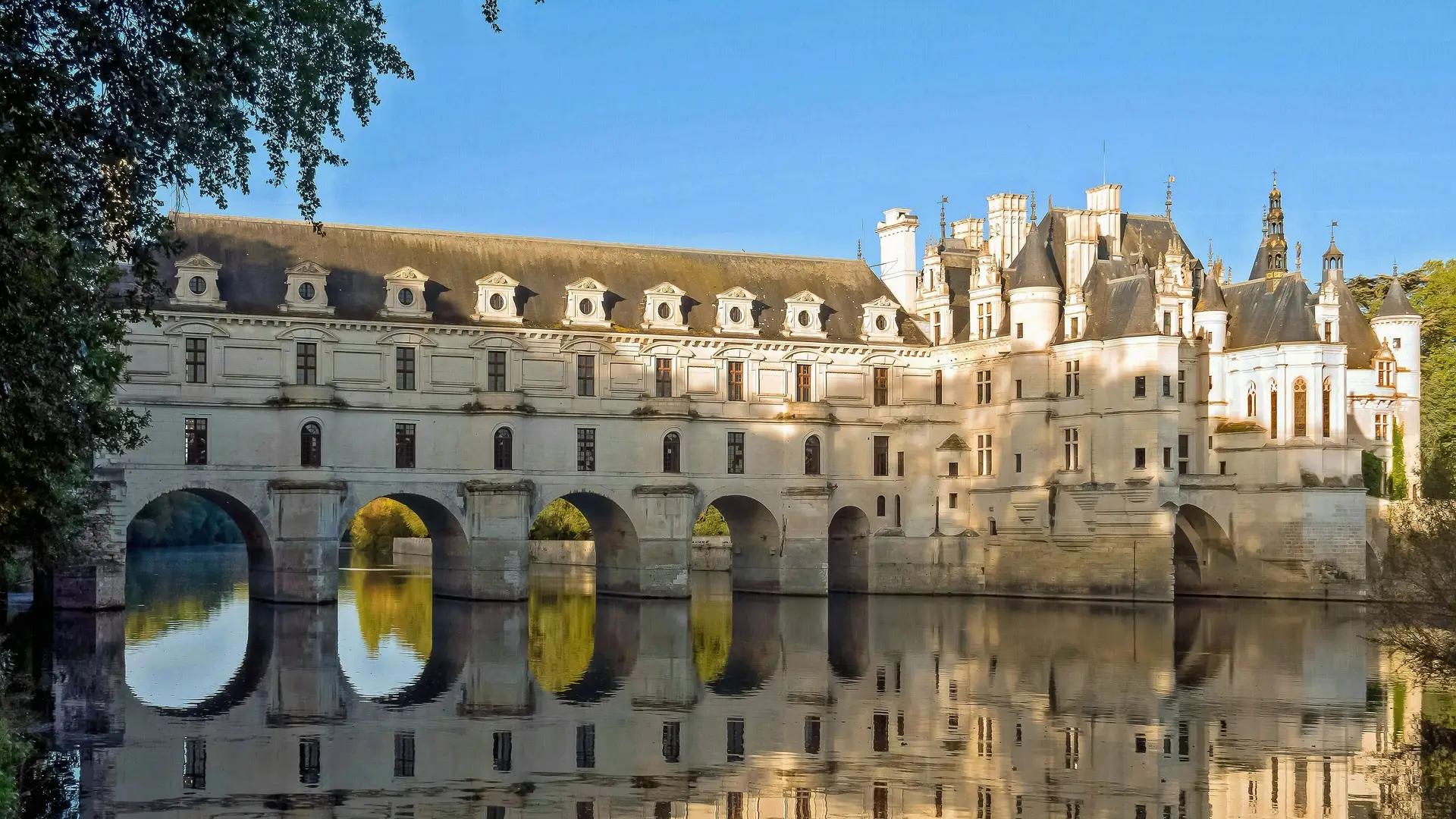
The most-photographed exterior view of Chenonceau is taken from the west bank of the River Cher, downstream of the château by a short five-minute walk, looking back at the five gallery arches reflected in the slow water of the Cher. The west bank catches direct sun from mid-afternoon onward, which means late-afternoon and early-evening light — broadly 16:00 to 18:00 from April through September — produces the warmest tones on the white tuffeau limestone of the arches and gallery. From November through February the equivalent golden window sits earlier in the day, between roughly 14:00 and 15:30, because the sun sets noticeably earlier and lower in the southern sky. Morning light hits the east façade and Diane de Poitiers' formal garden first, which favours a counter-clockwise route — gardens first, gallery second, river-bank view last.
Interior photography is permitted throughout the château without tripods or flash; commercial gear and drone work require advance written permission from the operator. The Long Gallery's 18 windows along both sides of the lower floor produce reliable indirect light all day, which means the gallery itself photographs well at any entry time, but the rooms that depend on natural light through Renaissance casement windows — the Five Queens' Bedroom, Diane's bedroom, the chapel and Louise of Lorraine's mourning chamber — are markedly stronger before 11:00 and after 16:00, when the sun angle is low enough to throw long, raking light across the painted coffered ceilings and 16th-century Flemish tapestries. A 09:00 entry combined with a late-afternoon garden walk and river-bank view delivers the strongest photographic conditions of any single visit pattern.
Frequently asked
What is the absolute best month to visit Chenonceau?
May and September deliver the strongest combination of mild weather, manageable crowds and peak garden display. June is close behind with the longest daylight of the year. July and August offer reliable warm weather but the heaviest crowd pressure and audio-guide shortages.
Is Chenonceau open on Christmas Day?
No. 25 December is the only annual closure on the calendar. The château is open every other day of the year, including Christmas Eve, Boxing Day, New Year's Eve and New Year's Day, with hours adjusted seasonally.
When are the Christmas illuminations on?
The Noël à Chenonceau season runs from late November through the first week of January. Every major room is themed and decorated by the resident team. The first half (late November to third week of December) is the quieter half; the second half coincides with French school holidays.
Which day of the week is busiest?
Saturday is the busiest day, followed by Sunday and then Tuesday (Tuesday absorbs traffic redirected from state-run Loire châteaux that close that day). Wednesdays and Thursdays outside school holidays are the calmest.
Is the audio guide worth reserving in advance?
In July and August, yes — audio-guide units are limited and often run out before mid-morning at peak. Outside July and August, walk-up audio guides are usually available. Christmas week and the first week of January are also worth reserving.
What time should I arrive to avoid coach groups?
Arrive at opening (around 09:00) or in the last two hours before close. Coach groups from Paris typically reach the gate between 11:00 and 11:30 and most leave by 16:30, so early morning and late afternoon are materially quieter than midday.
When are the gardens at their peak?
Diane de Poitiers' garden peaks in May and June on roses. Catherine de Medici's garden peaks earlier, in April, on tulips and bulbs. The potager kitchen garden runs strong from April through October. November to March the gardens are dormant but the structural geometry still reads well.
How long should I plan for a visit?
Allow 2.5 to 3 hours for the château interior, the gallery across the Cher, the kitchens, and both formal gardens. Add another hour for the maze, the farm and the far estate. A full afternoon (about 4 hours) is the comfortable pace.
Is winter a good time to visit?
Yes — winter is the quietest period and the Christmas decorations (late November to early January) make the interiors particularly atmospheric. Hours are shorter (often closing 16:30) and gardens are dormant, so plan a mid-afternoon arrival.
Are there special events during the year?
The two recurring annual events are the spring garden display (April–June) and the Noël à Chenonceau Christmas season (late November to early January). The operator occasionally hosts concerts and Renaissance-themed evenings; check chenonceau.com for the current calendar.