 Ohne Anstehen buchbar
 Anreise zum Château de Chenonceau ab Tours
Jede realistische Transportmöglichkeit von Tours bis zum Schlosstor – TER-Zug, Mietwagen, Loire à Vélo-Radweg und die TGV-Anbindung ab Paris.
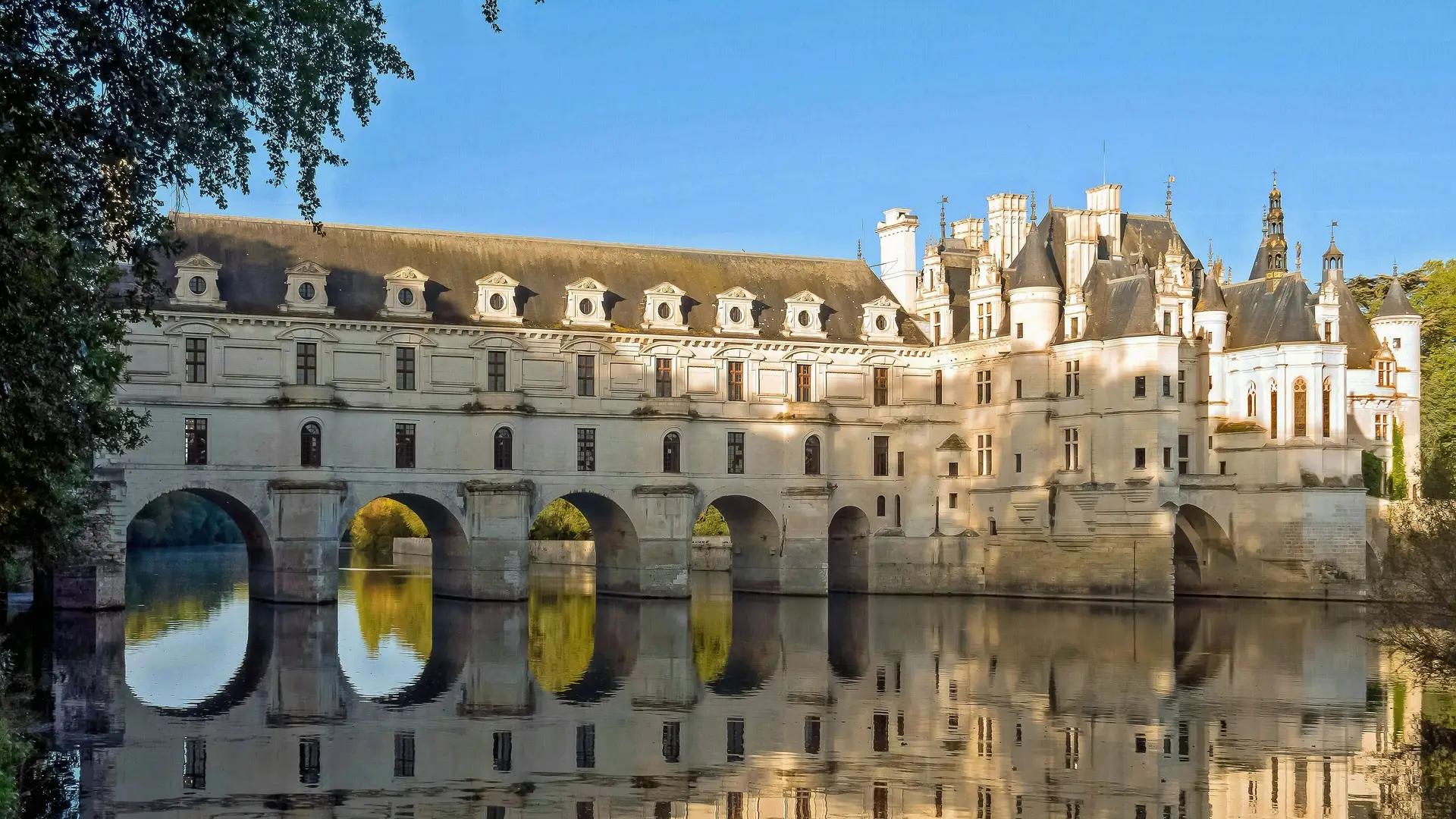
Chenonceau liegt etwa 26 Kilometer östlich von Tours am Fluss Cher, im Département Indre-et-Loire der Region Centre-Val de Loire. Die Anreise ab Tours ist einer der einfachsten Zug-zu-Schloss-Transfers im gesamten Loiretal – eine kurze TER-Regionalbahnfahrt, gefolgt von einem fünfminütigen Spaziergang entlang einer Platanenallee bis zum Tor. Die meisten internationalen Besucher erreichen Tours entweder mit dem TGV ab Paris Montparnasse oder mit einem Mietwagen von einem Loiretal-Stützpunkt in Amboise, Blois oder Saumur aus. Von dort teilt sich die Route klar in drei gute Optionen: Zug, Auto und das Loire à Vélo-Radwegenetz, das die großen Loire-Schlösser auf eigenen Radwegen verbindet. Dieser Leitfaden behandelt jede Option der Reihe nach, mit Fahrzeiten, Umsteigepunkten und den praktischen Details, die entscheiden, welche für Ihren Tag am besten geeignet ist.
Der TER-Zug von Tours nach Chenonceaux
Der TER Centre-Val de Loire-Regionalzug von Tours nach Chenonceaux ist das Rückgrat der meisten unabhängigen Besuche und die Option, die der Schlossbetreiber auf seiner eigenen Informationsseite internationalen Besuchern als Erstes nennt. Die Züge fahren vom Hauptbahnhof Tours im Stadtzentrum ab, benötigen insgesamt etwa 25 bis 30 Minuten und halten direkt im Dorf Chenonceaux, fünf Gehminuten vom Schlosstor entfernt entlang einer Platanenallee. Die Fahrt führt unterwegs durch Amboise, was bedeutet, dass dieselbe Strecke als Verbindung dient, wenn Sie Chenonceau mit dem königlichen Schloss von Amboise oder dem Clos Lucé am selben Tag kombinieren möchten. Tickets sind über SNCF Connect, die oui.sncf-App oder direkt an den Fahrkartenautomaten und am Schalter während der besetzten Zeiten erhältlich.
Die Taktfrequenz ist der Punkt, den man bei der Planung beachten sollte. Anders als die Pariser Pendlerlinien verkehrt der TER Tours–Chenonceaux außerhalb der Hauptsaison nicht stündlich; rechnen Sie in der Nebensaison mit etwa sechs bis acht Hin- und Rückfahrten pro Tag und im Juli und August rund um den französischen Ferienhöhepunkt mit einigen mehr. Überprüfen Sie den Fahrplan von SNCF Connect, bevor Sie sich auf einen TGV-Slot ab Paris festlegen, damit Sie nicht in Tours festsitzen und auf den nächsten Regionalzug warten müssen. Die Züge sind einstöckige Regionalwagen mit Gepäckablagen, offenen Fahrradstellplätzen und freier Sitzplatzwahl im gesamten Wagen. Das Bahnhofsgebäude in Chenonceaux ist klein und außerhalb der Kernzeiten nicht besetzt; drucken Sie Tickets im Voraus aus oder laden Sie sie vor der Reise in die SNCF-App. Setzen Sie sich ab Tours auf die Südseite des Wagens für die besten Ausblicke, während die Strecke dem Chertal östlich durch Weinberge und kleine Dörfer folgt.
Anreise mit dem Auto ab Tours und Loiretal-Stützpunkten
Die Fahrt von Tours nach Chenonceau dauert über die D976 etwa 30 Minuten. Die Route folgt dem Chertal östlich durch Bléré, bevor sie nach Süden zum Dorf Chenonceaux abbiegt. Die Strecke ist an jeder Kreuzung gut ausgeschildert und durchgehend zweispurig, mit Überholmöglichkeiten auf längeren Geraden. Von Amboise ist die Fahrt noch kürzer – 15 Minuten südlich auf der D81 –, weshalb viele Loire-Besucher für eine Mehrschloss-Tour lieber in Amboise als in Tours selbst übernachten. Von Blois dauert die Fahrt etwa 50 Minuten über die Autobahn A85 und ein kurzes Stück der D976 durch Bléré. Von Saumur im westlichen Loire-Tal rechnen Sie mit etwa 1 Stunde 15 Minuten über Tours, und von Bourges im östlichen Loire-Tal mit rund 1 Stunde 30 Minuten über die A85 (eine mautpflichtige Passage).
Das Parken am Schloss gehört zu den unkompliziertesten logistischen Details im Loire-Tal. Der offizielle Parkplatz liegt direkt am Tor, ist befestigt, groß und kostenfrei – ein deutlicher Vorteil gegenüber den staatlichen Schlössern flussaufwärts wie Chambord und Cheverny, wo das Parken oft einen langen Fußweg vom Eingang entfernt ist oder kostenpflichtig. An Juli- und Augustwochenenden füllt sich der Parkplatz, wobei die Hauptverkehrszeit zwischen 11:00 und 14:30 Uhr um die Mittagsankünfte liegt. Eine Ankunft vor 10:00 oder nach 16:00 Uhr macht das Parken ganzjährig unkompliziert, auch im Hochsommer. Es gibt keinen formellen Ausweichparkplatz auf der Dorfseite; falls der Hauptparkplatz zur Spitzenzeit voll ist, parkt man praktischerweise im Dorf Chenonceaux (kostenloses Parken auf den meisten Nebenstraßen) und geht die wenigen Minuten zurück zum Tor über die Platanenallee.
Die TGV-Verbindung von Paris über Tours
Von Paris aus führt die realistische öffentliche Verkehrsverbindung mit dem TGV vom Pariser Bahnhof Montparnasse nach Tours, gefolgt von der oben beschriebenen TER-Linie nach Chenonceaux – alles auf einem Ticket. Die TGV-Fahrt dauert etwa 1 Stunde 15 Minuten und verkehrt tagsüber ungefähr stündlich, betrieben von SNCF Voyageurs entweder unter der Marke inOui (Vollservice, reservierte Plätze, umfassendes Bordangebot) oder der günstigen Marke Ouigo (niedrigere Preise, weniger Komfort, separate Buchung über die spezielle Ouigo-App). Beide Dienste bringen Sie zum Hauptbahnhof von Tours, von wo aus Sie nur wenige Schritte über die Bahnhofshalle zu den TER-Gleisen für die Weiterfahrt nach Chenonceaux gehen. Von der Pariser Innenstadt bis zum Schlosstor benötigen Sie insgesamt etwa 2 Stunden 45 Minuten, inklusive Umstiegszeit und dem kurzen Fußweg vom Bahnhof Chenonceaux zum Tor.
Zwei praktische Punkte sind für die Paris-Verbindung entscheidend und können Ihnen eine Stunde sparen oder kosten. Erstens: Buchen Sie die TGV–TER-Kombination, bevor Sie die Tickets einzeln kaufen – der TGV fährt stündlich, der TER jedoch nicht, und ein verpasster Anschluss in Tours kann eine 90-minütige Wartezeit auf dem Bahnsteig bedeuten. SNCF Connect zeigt die kombinierte Reise als ein Suchergebnis an und bucht beide Abschnitte auf einem Ticket. Zweitens: Der TGV aus Paris hält an zwei verschiedenen Bahnhöfen in Tours – dem Hauptbahnhof (zentraler Endbahnhof nahe der Innenstadt) und Saint-Pierre-des-Corps (einem Knotenpunkt am östlichen Stadtrand, zwei Regionalhalte östlich). Die meisten TGVs halten an beiden; einige nur in Saint-Pierre-des-Corps, um Fahrzeit zu sparen. Der TER nach Chenonceaux fährt vom Hauptbahnhof Tours ab, daher bevorzugen Sie einen TGV, der dort hält, um einen zusätzlichen innerstädtischen Umstieg zu vermeiden.
Loire à Vélo: Die Fahrradroute
Loire à Vélo ist das speziell ausgebaute Fernradwegenetz, das entlang der Loire und ihrer Nebenflüsse zwischen Cuffy im Osten und der Atlantikküste bei Saint-Brevin-les-Pins im Westen verläuft, mit einem Abzweig, der dem Chertal an Chenonceau vorbei folgt. Die Route ist größtenteils flach, an jeder Kreuzung gut mit dem grünen Loire-à-Vélo-Logo ausgeschildert und nutzt eine Kombination aus eigenen Radwegen, ruhigen Landstraßen und kurzen gemeinsamen Abschnitten – die hochwertigste Radinfrastruktur aller französischen Fernradwege, zertifiziert durch das europäische EuroVelo-Netzwerk. Von Tours aus beträgt die Fahrt nach Chenonceau etwa 35 Kilometer entlang des Cher-Astes und dauert für die meisten Radfahrer im Touren-Tempo 2 bis 2,5 Stunden pro Strecke, plus Stopps in Dörfern und für Erfrischungen unterwegs.
Mehrere praktische Aspekte machen dies auch für normale Besucher realistisch, nicht nur für ernsthafte Tourenradler. Fahrradverleih gibt es in mehreren Geschäften in Tours, darunter Anbieter am Bahnhof und entlang des Flussufers, mit Hybridrädern, E-Bikes (eine sinnvolle Aufwertung bei Sommerhitze) und Packtaschen als Standardmietoptionen. Züge auf der Strecke Tours–Chenonceaux nehmen Fahrräder kostenlos im gekennzeichneten Waggon mit Fahrradpiktogramm mit, sodass Sie eine Richtung radeln und die andere mit dem Zug fahren können – das übliche Muster ist, morgens mit dem Zug nach Chenonceaux zu fahren, das Schloss zu besichtigen und dann am Nachmittag flussabwärts zurück nach Tours zu radeln. Mehrere restaurierte Mühlen und kleine Dörfer entlang des Cher-Astes bieten sich für natürliche Mittags- und Kaffeepausen an. Die offizielle Website von Loire à Vélo veröffentlicht tägliche Routenkarten, GPX-Downloads und Unterkunftsverzeichnisse für mehrtägige Varianten.
Von Amboise, Blois und anderen Loire-Basen
Viele internationale Besucher übernachten nicht in Tours selbst, sondern in einer der kleineren Loire-Städte mit ruhigeren Unterkünften am Fluss. Von Amboise aus ist Chenonceau eine 15-minütige Autofahrt südlich auf der D81 – die kürzeste Verbindung aller großen Loire-Schloss-Paare und der Grund, warum Amboise eine beliebte Basis für zwei Nächte ist, wenn Besucher Chenonceau mit dem königlichen Schloss von Amboise und dem Clos Lucé kombinieren möchten. Der TER von Amboise nach Chenonceaux hält an beiden Enden derselben Regionalstrecke und benötigt etwa 12 Minuten, sodass der Zug auch ohne Mietwagen funktioniert. Von Blois weiter östlich dauert die Autofahrt etwa 50 Minuten über die Autobahn A85; der Zug erfordert einen Umstieg in Tours und benötigt insgesamt etwa 1 Stunde 30 Minuten inklusive Umsteigezeit auf dem Bahnsteig.
Von Saumur im westlichen Loire-Tal beträgt die Fahrt mit dem Auto etwa 1 Stunde 15 Minuten über Tours; mit dem Zug rechnen Sie mit rund 2 Stunden inklusive Umstieg am Hauptbahnhof Tours. Von Orléans im östlichen Loire-Tal etwa 1 Stunde 30 Minuten mit dem Auto über die Autobahnen A10 und A85, oder rund 2 Stunden 15 Minuten mit dem Zug über Tours. Besucher, die in der Sologne südlich von Chambord übernachten, erreichen Chenonceau in etwa 45 Minuten mit dem Auto über Nebenstraßen. Es gibt keinen direkten öffentlichen Bus von Tours nach Chenonceau, und das regionale Busnetz im Chertal ist dünn – der Zug ist die einzige realistische öffentliche Verkehrsoption ohne Auto von außerhalb des unmittelbaren Chertals, und Taxis ab Tours sind am Bahnhofsstand verfügbar, aber für eine einfache Fahrt aufs Land aufgrund der 26 Kilometer Entfernung teuer.
Häufig gestellte Fragen
Wie lange dauert die Zugfahrt von Tours?
Etwa 25 bis 30 Minuten mit der TER-Linie Centre-Val de Loire vom Hauptbahnhof Tours nach Chenonceaux. Der Bahnhof liegt fünf Gehminuten vom Schlosstor entfernt, entlang einer Allee mit Platanen.
Fährt der Zug stündlich ab Tours?
Nein. Die TER-Linie Tours–Chenonceaux verkehrt außerhalb der Hauptsaison im Sommer nicht stündlich – rechnen Sie in der Nebensaison mit sechs bis acht Verbindungen pro Tag in beide Richtungen. Prüfen Sie vor einer Weiterreise ab Paris stets die Verbindungen auf SNCF Connect.
Kann ich direkt von Paris nach Chenonceau gelangen?
Nicht mit dem Zug. Die realistische Route ist: TGV von Paris Montparnasse nach Tours (ca. 1 Stunde 15 Minuten), dann die TER weiter nach Chenonceaux. Die Gesamtreisezeit von Tür zu Tür beträgt etwa 2 Stunden 45 Minuten. SNCF Connect bucht beide Abschnitte als eine durchgehende Reise.
Ist der Parkplatz kostenlos?
Ja – der offizielle Schlossparkplatz am Tor ist groß, asphaltiert und kostenfrei. An Juli- und Augustwochenenden wird er voll; eine Ankunft vor 10:00 Uhr oder nach 16:00 Uhr macht das Parken ganzjährig problemlos.
Kann ich von Tours mit dem Fahrrad nach Chenonceau fahren?
Ja. Der Loire à Vélo-Abschnitt Cher führt von Tours nach Chenonceaux auf eigenen Radwegen und ruhigen Straßen – etwa 35 Kilometer, 2 bis 2,5 Stunden pro Strecke. Fahrräder werden in der TER kostenlos mitgenommen, sodass sich ein Tag mit Zug-Hinfahrt und Rad-Rückfahrt hervorragend anbietet.
Gibt es einen direkten Bus ab Tours?
Nein. Das regionale Busnetz bietet keine direkte Verbindung von Tours nach Chenonceau. Die TER ist die einzige realistische öffentliche Verkehrsoption ohne Auto und in der Regel schneller als jede indirekte Busverbindung.
Wie weit ist Amboise von Chenonceau entfernt?
Etwa 15 Autominuten südlich auf der D81 oder 12 Minuten mit dem TER auf derselben Strecke Tours–Chenonceaux. Amboise ist der beliebteste Ausgangspunkt für Besucher, die Chenonceau mit dem königlichen Schloss und dem Clos Lucé kombinieren möchten.
Von welchem Bahnhof in Tours fährt der TER ab?
Vom Hauptbahnhof Tours (Gare de Tours) im Stadtzentrum. Einige TGVs aus Paris halten nur in Saint-Pierre-des-Corps, zwei Stationen östlich – bevorzugen Sie einen TGV, der am Hauptbahnhof Tours hält, um einen zusätzlichen Umstieg zu vermeiden.
Sind Taxis am Bahnhof Tours verfügbar?
Ja, am Taxistand vor dem Hauptbahnhof Tours, aber eine einfache Taxifahrt nach Chenonceau ist teuer – in der Regel ein Vielfaches des TER-Tarifs. Für Gruppen von drei oder vier Personen, die den Fahrpreis teilen, kann es vernünftig sein; für Alleinreisende oder Paare ist der Zug das bessere Preis-Leistungs-Verhältnis.
Kann ich Gepäck im Zug mitnehmen?
Ja – der TER verfügt über offene Gepäckablagen, und die üblichen französischen Regionalregeln erlauben Standardkoffer und Rucksäcke kostenlos. Es gibt keinen offiziellen Gepäckaufbewahrungsservice am Bahnhof Chenonceaux. Wenn Sie zwischen Hotels wechseln, lagern Sie Ihr Gepäck daher vor der Abfahrt in Tours ein.